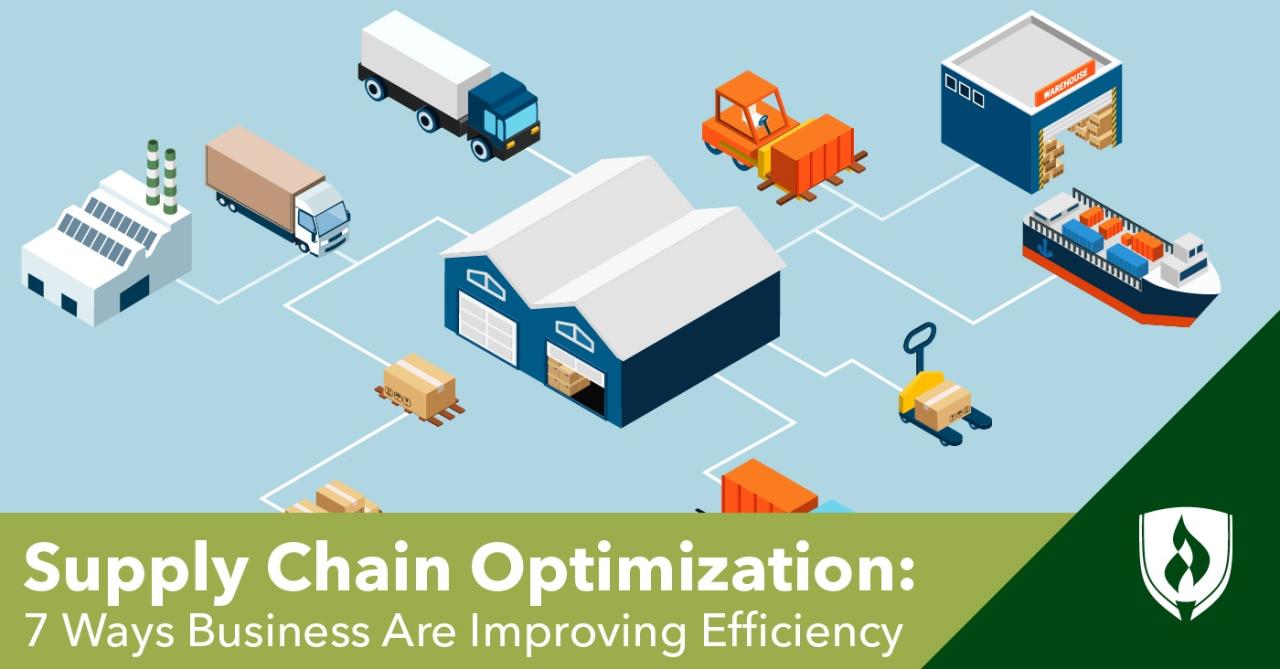
Beginning with Supply chain optimization, the narrative unfolds in a compelling and distinctive manner, drawing readers into a story that promises to be both engaging and uniquely memorable.
Supply chain optimization plays a crucial role in streamlining operations and reducing costs for businesses, making it a key focus area for organizations looking to enhance their competitive edge in today’s market.
Overview of Supply Chain Optimization
Supply chain optimization involves maximizing the efficiency and effectiveness of the entire supply chain process, from raw materials sourcing to delivering the final product to customers. By streamlining operations, reducing costs, and improving overall performance, businesses can gain a competitive edge in the market.
Importance of Optimizing the Supply Chain
Optimizing the supply chain is crucial for businesses to stay competitive in today’s fast-paced market environment. It helps in reducing lead times, minimizing disruptions, and enhancing customer satisfaction through timely deliveries. By optimizing the supply chain, companies can improve their bottom line and overall profitability.
- Reduced Costs: Supply chain optimization helps in identifying cost-saving opportunities, such as consolidating shipments, reducing inventory levels, and minimizing transportation expenses.
- Enhanced Efficiency: By optimizing processes and workflows, businesses can eliminate bottlenecks, reduce waste, and improve overall operational efficiency.
- Improved Customer Service: A well-optimized supply chain ensures timely deliveries, accurate order fulfillment, and better communication with customers, leading to increased customer satisfaction and loyalty.
- Increased Flexibility: Optimizing the supply chain allows businesses to quickly adapt to changes in demand, market conditions, and other external factors, ensuring agility and resilience in the face of uncertainties.
Factors Affecting Supply Chain Optimization
Supply chain optimization is influenced by various factors that play a crucial role in enhancing efficiency and reducing costs within the supply chain process.
Key Factors Impacting Supply Chain Optimization
- Supply Chain Visibility: Having real-time visibility into all aspects of the supply chain, from sourcing to delivery, is essential for making informed decisions and optimizing processes.
- Collaboration: Effective collaboration among all stakeholders, including suppliers, manufacturers, distributors, and retailers, is key to streamlining operations and improving overall performance.
- Inventory Management: Proper inventory management practices help in reducing carrying costs, minimizing stockouts, and ensuring timely order fulfillment.
- Demand Forecasting: Accurate demand forecasting based on historical data and market trends enables organizations to align supply with demand and avoid overstocking or understocking.
Technology’s Influence on Supply Chain Optimization
Technology plays a significant role in driving supply chain optimization by enabling automation, enhancing communication, and improving decision-making processes.
- Automation: Technologies like robotic process automation (RPA) and artificial intelligence (AI) help in automating repetitive tasks, reducing errors, and increasing operational efficiency.
- Data Integration: Advanced technologies facilitate seamless integration of data from various sources, allowing for better visibility and decision-making across the supply chain network.
- Internet of Things (IoT): IoT devices enable real-time tracking of assets, monitoring of inventory levels, and predictive maintenance, contributing to improved supply chain performance.
Role of Data Analytics in Optimizing the Supply Chain
Data analytics plays a critical role in supply chain optimization by providing valuable insights, identifying patterns, and predicting future trends based on historical data.
- Predictive Analytics: By analyzing historical data and applying predictive analytics models, organizations can anticipate demand fluctuations, optimize inventory levels, and enhance supply chain responsiveness.
- Optimization Algorithms: Utilizing optimization algorithms helps in determining the most efficient routes, scheduling deliveries, and allocating resources effectively to minimize costs and improve overall supply chain performance.
- Continuous Improvement: Data analytics enables continuous monitoring and evaluation of supply chain processes, allowing organizations to identify areas for improvement, implement corrective actions, and drive ongoing optimization efforts.
Strategies for Efficient Transportation and Logistics
Efficient transportation and logistics play a crucial role in optimizing the supply chain by ensuring timely deliveries, reducing costs, and improving overall operational efficiency.
Different Transportation Modes in Supply Chain Management
- Road transport: Often used for short to medium-distance shipments, providing flexibility and accessibility to various locations.
- Rail transport: Suitable for long-distance hauls, offering cost-effective solutions for bulk cargo transportation.
- Sea transport: Ideal for international shipments, especially for bulky or heavy goods, enabling economies of scale.
- Air transport: Known for its speed and reliability, preferred for urgent deliveries or high-value goods.
Significance of Logistics in Supply Chain Optimization
Logistics involves the management of the flow of goods and services from point of origin to the point of consumption, encompassing storage, transportation, and distribution.
Efficient logistics can lead to reduced lead times, minimized inventory holding costs, and improved customer satisfaction.
Examples of Efficient Transportation and Logistics Practices
- Just-in-time (JIT) delivery: Aligning production schedules with transportation schedules to minimize inventory levels and storage costs.
- Cross-docking: Directly transferring goods from inbound to outbound transportation without the need for storage, reducing handling and storage costs.
- Route optimization: Using advanced algorithms to plan the most efficient routes for deliveries, reducing fuel consumption and transportation costs.
Challenges in Supply Chain Optimization
Supply chain optimization is a complex process that involves various challenges that can hinder efficiency and effectiveness. Identifying these challenges and finding strategies to overcome them is crucial for the success of supply chain operations.
Common Challenges in Supply Chain Optimization
One of the common challenges faced in optimizing the supply chain is the lack of visibility and transparency across the entire supply chain network. Without real-time data and insights, it becomes difficult to make informed decisions and coordinate activities effectively.
Another challenge is the increasing complexity of global supply chains, with multiple stakeholders, partners, and suppliers involved. Coordinating all these entities and ensuring seamless integration can be a daunting task.
Additionally, inventory management poses a significant challenge in supply chain optimization. Balancing inventory levels to meet demand while minimizing costs and avoiding stockouts requires careful planning and forecasting.
Impact of Disruptions like Natural Disasters
Natural disasters such as hurricanes, earthquakes, or pandemics can have a devastating impact on the supply chain. These disruptions can lead to delays in production, transportation, and delivery, causing bottlenecks and shortages in the supply chain network.
Such disruptions can result in increased costs, loss of revenue, and damage to the reputation of the company. It is crucial for organizations to have contingency plans in place to mitigate the impact of these disruptions and ensure business continuity.
Strategies to Overcome Challenges in Supply Chain Optimization
- Invest in advanced technology such as IoT, AI, and blockchain to improve visibility and transparency across the supply chain network.
- Collaborate closely with suppliers, partners, and customers to enhance communication and coordination.
- Implement robust risk management strategies to identify and mitigate potential disruptions in the supply chain.
- Adopt lean principles and continuous improvement practices to streamline processes and reduce waste in the supply chain.
In conclusion, Supply chain optimization is a multifaceted approach that offers numerous benefits to businesses, ranging from cost savings to improved customer satisfaction. By prioritizing efficient transportation, leveraging technology, and overcoming challenges, companies can truly optimize their supply chains for success in the long run.
FAQ Guide
What are some common challenges in implementing supply chain optimization?
Some common challenges include lack of visibility across the supply chain, inefficient processes, and difficulty in aligning different stakeholders.
How does data analytics contribute to optimizing the supply chain?
Data analytics helps in analyzing large datasets to identify trends, inefficiencies, and opportunities for improvement in the supply chain processes.
Why is logistics management important in the context of supply chain optimization?
Logistics management ensures the smooth flow of goods, information, and finances between different points in the supply chain, optimizing overall operations.


